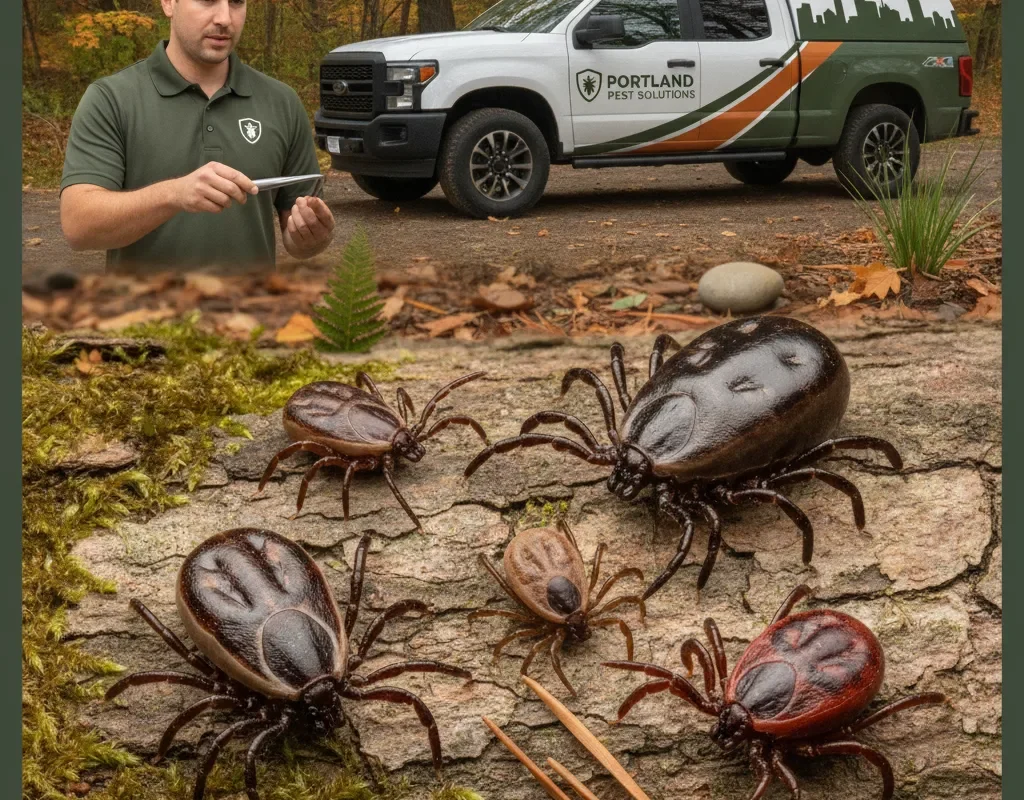
Ticks
Ixodes scapularis / Dermacentor variabilis
How to Identify
– Wear light clothes and check skin after hikes.
– Check pets and kids after yard play.
– Look in hairline and behind the ears.
Health Risks
Ixodes scapularis transmits Lyme disease, anaplasmosis, and babesiosis; Dermacentor variabilis transmits Rocky Mountain spotted fever; nymph-stage ticks can be as small as a poppy seed. A tick bite can pass germs that make you sick. Some of these illnesses are serious if not caught early. Young ticks are as small as a poppy seed. That tiny size makes them easy to miss on skin.
Deer ticks here can spread Lyme disease. Early checks cut disease risk.
Our Treatment Method
Granular or liquid residual acaricide applied to yard perimeter and transition zones; deer-exclusion fencing; host-targeted desiccant tubes (cotton bait for rodents) for tick population reduction. A pro treats the yard edges where ticks wait. Keeping deer and mice out lowers the tick supply. Bait tubes target the mice that carry young ticks. Fewer host animals means fewer ticks in your yard.
We treat yard edges and shady brush with tick spray. We also recommend mouse-targeted tubes to cut tick numbers.
Prevention Tips
– Apply EPA-registered tick repellent (DEET 20%+ or permethrin on clothing) before outdoor activity.
– Wear long sleeves and pants tucked into socks in wooded or grassy areas.
– Conduct a full-body tick check within 2 hours of outdoor exposure.
– Mow lawns regularly and clear leaf litter from yard edges and play areas.
– Shower within 2 hours of potential tick exposure to dislodge unattached ticks.
– Keep lawn edges trimmed and leaf litter cleared.
– Create a three-foot mulch or stone barrier at yard edge.
– Use EPA repellent on skin and permethrin on clothes.
Habitat & Behavior
Local Prevalence
Protection Plans
Choose Your Level of Protection
Every plan includes free re-treatments, a dedicated technician, and our No-Bug Guarantee.
Essential
- Quarterly exterior perimeter treatments (four visits/year)
- Targeted interior spot treatments at no extra charge between visits
- Annual inspection and written treatment summary
- 30-day satisfaction re-treatment guarantee
Premium
- Monthly comprehensive service plus termite monitoring
- Priority scheduling with 24/7 emergency callbacks
- Two seasonal mosquito and tick yard treatments
- Annual exclusion audit with small repairs included
Professional
- Monthly interior + exterior service (12 visits/year)
- Priority same-week scheduling and one free callback between visits
- Rodent monitoring and basic exclusion checks (minor sealing included)
- Seasonal wasp and insect activity checks
Don't Let Pests Win.
Take Back Your Home Today.
Every day you wait gives pests more time to multiply and cause damage. Our licensed technicians are ready to help — often the same day you call.
Locally Owned & Operated
Trusted for 21+ years
Licensed & Insured
Bonded, licensed & insured
Satisfaction Guaranteed
We stand behind our work
Ready to get started?
Choose how you'd like to connect with us.
Available Mon–Fri 8:00 AM–6:00 PM; Sat 9:00 AM–3:00 PM. Emergency and weekend appointments available; 24/7 on-call for urgent rodent or bee-swarm situations.